

How Modern Logistics Improves Efficiency
Logistics used to mean moving things from Point A to Point B. Today, it means orchestrating a complex, interconnected system — and the businesses that do it well are winning on speed, cost, and customer experience simultaneously.
The past decade has brought a wave of technology, data, and operational thinking that has fundamentally changed what’s possible in supply chain management. From AI-powered forecasting to real-time tracking and automated warehouses, modern logistics isn’t just faster — it’s smarter. And that intelligence translates directly into efficiency gains that compound across every part of the business.
Here’s how it works.
1. Real-Time Visibility Eliminates the Guesswork
Traditional logistics operated largely on estimates and assumptions. A shipment left the dock, and the next reliable update came when it arrived — or didn’t. That information gap forced businesses to build in buffers: extra inventory, longer lead times, and costly contingency plans.
Modern logistics platforms close that gap completely. GPS tracking, IoT sensors, and connected carrier networks give businesses live visibility into exactly where every shipment is, what condition it’s in, and when it will arrive. Exceptions — delays, temperature excursions, route deviations — are flagged automatically, often before they become problems.
The efficiency gain isn’t just operational. It’s organizational. When procurement, warehouse, and customer service teams all work from the same real-time data, they stop wasting time chasing updates and start making better decisions faster.

2. Automation Is Transforming the Warehouse
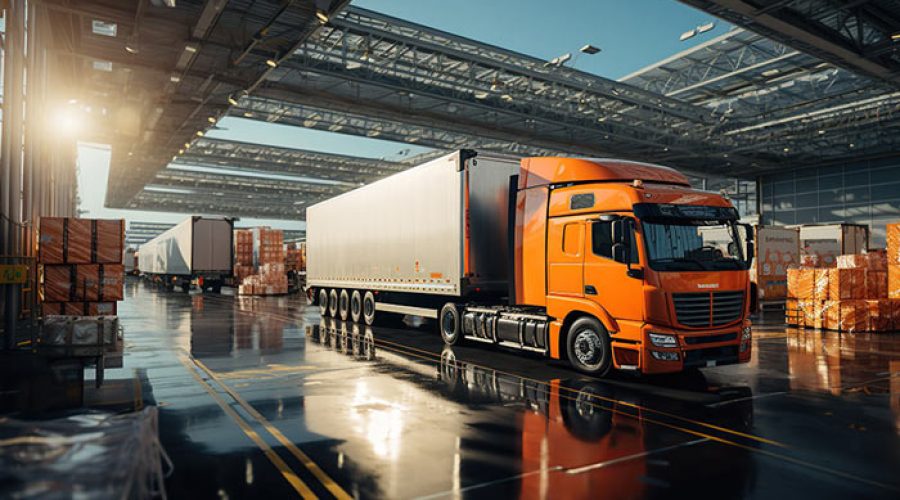
The modern warehouse looks nothing like it did 15 years ago. Automated conveyor systems, goods-to-person robotics, pick-to-light technology, and AI-driven warehouse management systems (WMS) have replaced many of the manual, error-prone processes that made fulfillment slow and expensive.
The results are measurable. Automated warehouses typically achieve pick accuracy rates above 99.9%, compared to 98–99% for manual operations — a difference that sounds small but represents thousands of mispicks avoided per month in high-volume facilities. Throughput speeds up dramatically. Labor costs per unit fall.
Critically, automation also improves scalability. A manual warehouse struggles to handle a 3x volume spike during peak season without a proportional surge in headcount. An automated facility can absorb that demand far more gracefully — which means businesses can grow without their logistics costs growing at the same rate.
3. Route Optimization Cuts Time and Cost on the Road
Getting goods to the right place is only part of the challenge. Getting them there efficiently — across hundreds or thousands of daily deliveries — requires computational power that no human dispatcher can match.
Modern route optimization software analyzes thousands of variables simultaneously: traffic patterns, delivery time windows, vehicle capacity, driver hours, fuel costs, and customer priorities. It produces routes that are tighter, faster, and cheaper than anything planned manually — and it adjusts dynamically when conditions change.
For last-mile delivery, where costs are highest and customer expectations are most demanding, this matters enormously. A 10–15% reduction in route distance translates directly into fuel savings, lower vehicle wear, fewer driver hours, and more deliveries per shift. Multiply that across a fleet of any meaningful size and the numbers become significant quickly.
4. Predictive Analytics Reduces Costly Surprises
One of the most expensive things in logistics is being caught off guard. An unexpected demand spike, a supplier disruption, or a capacity crunch can trigger a cascade of emergency decisions — expedited freight, last-minute sourcing, overtime labor — each of which carries a heavy premium.
Modern logistics uses predictive analytics to shrink the window of the unexpected. Machine learning models analyze historical patterns, external signals (weather, economic indicators, market trends), and real-time data to forecast demand, flag potential disruptions, and recommend proactive responses before problems materialize.
The efficiency improvement here is asymmetric. Preventing a single supply disruption or avoiding one wave of emergency freight often delivers more value than dozens of incremental optimizations. Predictive capability is one of the highest-ROI investments a logistics operation can make.
5. Integrated Technology Platforms Replace Fragmented Systems
One of the most overlooked sources of logistics inefficiency is fragmentation. When the TMS doesn’t talk to the WMS, the WMS doesn’t connect to the ERP, and the ERP can’t surface data to customer service, information moves slowly — or not at all. Decisions get made on stale data. Errors multiply at every handoff.
Modern logistics technology platforms are built for integration. APIs, cloud infrastructure, and standardized data formats mean that systems across the supply chain — carriers, warehouses, customs brokers, suppliers, and customers — can exchange information in real time with minimal friction.
The efficiency gains from integration are often hidden but substantial. Fewer manual data entries. Fewer errors at handoffs. Faster exception resolution. Less time spent reconciling conflicting information from different systems. When data flows seamlessly, people can focus on decisions rather than data wrangling.
6. Sustainability and Efficiency Are Converging
For years, sustainability and efficiency were seen as competing priorities — doing the right thing environmentally meant accepting higher costs or slower operations. That trade-off is increasingly obsolete.
Modern logistics tools — optimized routing, load consolidation, modal shift analysis, and network design software — often deliver both simultaneously. Fewer trucks on the road means lower emissions and lower fuel costs. Better-utilized warehouse space means less energy per unit stored. Reduced packaging materials cut both waste and cost.
This convergence matters strategically. As regulatory pressure, customer expectations, and investor scrutiny around environmental performance all increase, logistics operations that have already optimized for efficiency are better positioned to meet sustainability targets without starting from scratch.
7. Better Data Makes Supplier and Carrier Relationships Stronger
Efficiency doesn’t stop at your own four walls. The performance of your suppliers and carriers directly affects your logistics costs — and modern logistics technology gives you the data to manage those relationships more effectively.
Scorecards, on-time delivery metrics, lead time variance analysis, and cost benchmarking are no longer difficult to produce. When you can show a carrier precisely where their performance falls short — or demonstrate to a supplier how their late deliveries ripple through your fulfillment costs — conversations become more productive and outcomes improve.
The best logistics teams use data not as a blunt instrument for negotiation, but as a foundation for collaborative problem-solving. Suppliers who understand how their performance affects your costs are more likely to invest in improvements. Carriers who see consistent, predictable volume tend to prioritize your freight. Data transparency builds the kind of relationships that deliver sustained efficiency over time.
Efficiency as a Competitive Advantage
The businesses that have embraced modern logistics aren’t just running leaner operations — they’re competing differently. Faster fulfillment speeds become a customer acquisition tool. Lower logistics costs fund price competitiveness or margin improvement. Greater supply chain resilience means fewer disruptions reach the customer at all.
Efficiency in logistics used to mean “doing the same things cheaper.” Modern logistics has raised the definition: it means doing smarter things faster, with better information, across a more tightly integrated system.
The gap between businesses that have made this shift and those still running logistics on legacy systems and manual processes is widening. The technology is accessible, the business case is clear, and the time to act is now.

1 Comment
Saepe consequuntur quasi provident. culpa et architecto sapiente dolores. Asperiores quod enim quasi voluptatum aliquid. Sit odit quibusdam omnis Iusto autem molestias facilis. tempora delectus ullam. Qui et nobis exercitationem non tempore. Incidunt qui quasi necessitatibus. Et amet velit. Dolorem id qui fugit officiis. Ex quidem dolorum voluptatem. Est in ipsa nobis rerum. aut ab commodi ea id. Et occaecati culpa incidunt optio Eaque quidem reprehenderit dicta. Sed quod et voluptatem nesciunt cupiditate. Quos error qui deserunt saepe. Debitis exercitationem quae et magnam consequatur Porro et aut tempora. Cum quaerat placeat eaque quia.