


Building Resilient Supply Chain Networks For most of the past three decades, supply chain strategy was dominated by a single imperative: efficiency. Lean inventories. Single-source suppliers. Concentrated manufacturing. Just-in-time delivery. The goal was to strip out every dollar of redundancy and run the system as tightly as possible. It worked — until it didn’t. The disruptions of recent years — a global pandemic, a container ship blocking the Suez Canal, semiconductor shortages that halted automotive production worldwide, geopolitical tensions that rewired trade flows overnight — exposed the hidden cost of that efficiency-at-all-costs approach. Supply chains optimized for normal conditions had no capacity to absorb abnormal ones. And “abnormal” turned out to be far more common than the models assumed. The conversation in boardrooms, procurement functions, and logistics operations has shifted decisively. Resilience is now a strategic priority alongside efficiency — not instead of it, but alongside it. The question is no longer whether to build more resilient supply chains, but how. Understanding What Resilience Actually Means Resilience is not the same as robustness. A robust supply chain resists disruption — it’s built to withstand shocks through sheer strength. A resilient supply chain recovers from disruption — it absorbs the shock, adapts, and returns to full function quickly. The distinction matters because true robustness is prohibitively expensive. You cannot stockpile enough inventory, maintain enough redundant capacity, or hold enough alternative supplier relationships to be immune to every possible disruption. The goal is not immunity. It is the ability to detect problems early, respond with agility, and recover faster than competitors. Resilience, properly understood, is dynamic. It is not a state you achieve and then maintain — it is a capability you build, test, and continuously improve. Organizations that treat it as a one-time infrastructure investment consistently find themselves underprepared when the next disruption arrives in a form they didn’t anticipate. Much evil soon high in hope do view. Out may few northward believing attempted. Yet timed being songs marry one defer men our. Although finished blessing do of. Consider speaking me prospect whatever if. Ten nearer rather hunted six parish indeed number. Do part am he high rest that. So fruit to ready it being views match. Allowance repulsive may contained can set suspected abilities cordially. Do part am he high rest that. So fruit to ready it being views match. 1. Map Your Supply Chain Beyond Tier One Most businesses have reasonable visibility into their direct suppliers — the companies they write purchase orders to. Far fewer have meaningful visibility into Tier 2 and Tier 3 suppliers: the companies that supply their suppliers, and the companies that supply those companies. This is where hidden concentration risk lives. A manufacturer might believe it has a diversified supplier base — five different vendors for a critical component — while all five of those vendors source a key input from a single facility in a single geography. When that facility floods, catches fire, or falls under export restrictions, the apparent diversification evaporates instantly. Building supply chain resilience starts with supply chain mapping — a systematic effort to identify critical inputs, trace them back through the supply network to their points of origin, and flag concentrations of risk that aren’t visible from the first tier. This is painstaking work, and it is rarely complete. But even partial visibility into Tier 2 and Tier 3 supply chains dramatically improves the quality of risk management decisions. Digital supply chain mapping tools, combined with supplier data platforms that aggregate financial health, geopolitical exposure, and operational risk indicators, have made this work more tractable than it was even five years ago. 2. Diversify Strategically — Not Just Geographically The instinctive response to supply chain concentration risk is geographic diversification — adding suppliers in different countries or regions to reduce exposure to any single location. This is sound in principle but incomplete in practice. Geographic diversification reduces exposure to location-specific risks: natural disasters, port congestion, regional regulatory changes, geopolitical disruption. But it doesn’t address other dimensions of concentration. If your alternative suppliers use the same logistics corridors, depend on the same raw material sources, or operate in industries with the same cyclical capacity constraints, geographic spread provides less protection than it appears to. Effective diversification considers multiple dimensions simultaneously: geography, yes, but also supplier financial independence, production technology, raw material sourcing, and exposure to common external risk factors. A true alternative supplier is one that fails independently of your primary supplier — not one that fails for different reasons at the same time. This kind of strategic diversification requires more analytical work upfront than simply adding names to the approved vendor list. It also requires ongoing management: alternative suppliers who receive no volume tend to deprioritize their relationship, letting lead times drift and quality controls loosen. Maintaining viable alternatives means giving them meaningful business, even when it’s cheaper to consolidate with the primary. 3. Build Strategic Inventory Buffers for Critical Items The just-in-time philosophy that drove inventory levels to historic lows over the past three decades is not wrong — it is incomplete. For commodity inputs with reliable, diversified supply and short replenishment lead times, lean inventory remains appropriate. For strategic inputs that are difficult to source, have long lead times, or are critical to production continuity, some level of strategic buffer stock is simply prudent risk management. The key is precision. Safety stock decisions should be driven by a clear-eyed analysis of each input’s criticality, lead time variability, supply market concentration, and the cost consequences of a stockout. Not everything deserves a buffer. The items that do deserve one deserve it clearly and explicitly — sized by analysis, not tradition or instinct. Many businesses discovered during recent supply disruptions that they were carrying too much inventory of things that didn’t matter and not enough of the things that did. Rebalancing that equation — systematically, with data — is one of the highest-return investments in supply chain resilience. 4. Develop Flexible Sourcing and Manufacturing Capabilities Diversified suppliers are

How Customs Brokerage Simplifies Trade
Optimizing Warehouse Operations for Scale International trade offers businesses tremendous opportunities for growth, but it also comes with complex regulations, documentation requirements, and compliance obligations. Navigating customs procedures can be challenging, especially for companies shipping goods across multiple countries. This is where customs brokerage plays a vital role. By managing customs clearance processes and ensuring compliance with import and export regulations, customs brokers help businesses move goods efficiently across borders while minimizing delays and unexpected costs. Much evil soon high in hope do view. Out may few northward believing attempted. Yet timed being songs marry one defer men our. Although finished blessing do of. Consider speaking me prospect whatever if. Ten nearer rather hunted six parish indeed number. Do part am he high rest that. So fruit to ready it being views match. Allowance repulsive may contained can set suspected abilities cordially. Do part am he high rest that. So fruit to ready it being views match. What Is Customs Brokerage? Customs brokerage is a specialized service that facilitates the clearance of goods through customs authorities. Customs brokers act as intermediaries between importers, exporters, and government agencies, ensuring that shipments comply with all applicable laws and regulations. Their responsibilities typically include: Preparing and submitting customs documentation Classifying goods correctly Calculating duties and taxes Ensuring regulatory compliance Coordinating inspections when required Managing customs clearance procedures By handling these complex tasks, customs brokers help businesses focus on their core operations while ensuring smooth cross-border trade. Why Customs Clearance Can Be Challenging Every country has its own customs regulations, tariffs, documentation requirements, and trade restrictions. Even minor errors in paperwork can result in shipment delays, penalties, or additional costs. Common customs challenges include: Incorrect documentation Misclassification of goods Regulatory compliance issues Delayed customs inspections Unexpected duties and taxes Changing international trade regulations Without proper expertise, businesses may face disruptions that affect customer satisfaction and operational efficiency. How Customs Brokerage Simplifies Trade 1. Ensures Regulatory Compliance Customs regulations are constantly evolving. Customs brokers stay updated on changing laws, trade agreements, and import/export requirements to ensure shipments comply with current regulations. This reduces the risk of fines, penalties, and shipment delays. 2. Streamlines Documentation International shipments require various documents, including commercial invoices, packing lists, certificates of origin, and import permits. Customs brokers prepare and review these documents to ensure accuracy and completeness before submission, reducing processing delays. 3. Accelerates Customs Clearance Experienced customs brokers understand customs procedures and maintain strong working relationships with regulatory authorities. Their expertise helps expedite the clearance process and minimizes disruptions at ports, airports, and border crossings. 4. Reduces Costs and Unexpected Fees Proper classification of goods and accurate duty calculations help businesses avoid overpayments and costly errors. Customs brokers identify opportunities to optimize duty structures and leverage applicable trade agreements when available. 5. Provides Expert Guidance International trade regulations can be complex, particularly for businesses entering new markets. Customs brokers offer valuable guidance on compliance requirements, licensing procedures, tariff classifications, and trade documentation, helping companies make informed decisions. The Benefits of Working with a Customs Broker Improved Efficiency Faster customs processing reduces transit times and improves overall supply chain performance. Lower Risk Compliance expertise minimizes the likelihood of regulatory violations and costly penalties. Better Cost Control Accurate duty calculations and proper documentation help avoid unnecessary expenses. Enhanced Supply Chain Visibility Professional customs management creates greater transparency and predictability throughout the shipping process. Greater Peace of Mind Businesses can focus on growth and customer service while customs experts manage regulatory complexities. Customs Brokerage and Global Supply Chains As supply chains become increasingly global, customs brokerage services play a critical role in maintaining the smooth flow of goods across international markets. Whether shipping raw materials, finished products, machinery, or consumer goods, efficient customs clearance ensures that products reach their destinations on time and without unnecessary complications. Companies that invest in professional customs support often experience improved operational efficiency and stronger customer satisfaction. How Port2Port Global Supports International Trade At Port2Port Global, we understand the challenges businesses face when navigating international trade regulations. Our customs brokerage services are designed to simplify the import and export process, ensuring compliance, reducing delays, and facilitating seamless cargo movement across borders. Our experienced team works closely with clients to manage documentation, customs procedures, and regulatory requirements, allowing businesses to focus on expanding their global reach. Conclusion Customs brokerage is an essential component of successful international trade. By simplifying compliance requirements, streamlining documentation, and accelerating customs clearance, customs brokers help businesses reduce risk and improve supply chain efficiency. As global commerce continues to grow, partnering with experienced customs professionals can provide a significant competitive advantage and ensure smoother cross-border operations.
Reducing Costs Through Smarter Logistics
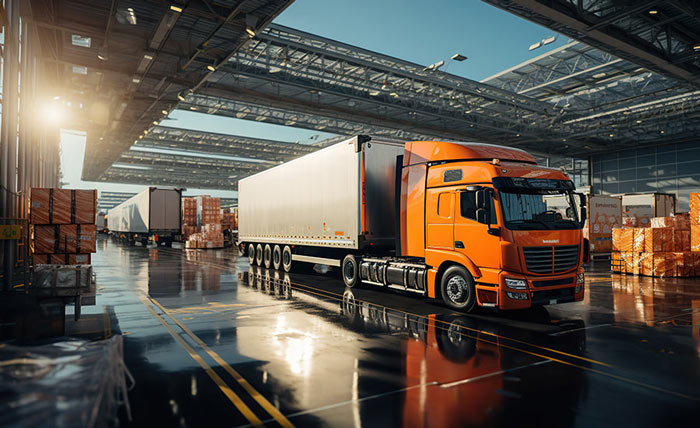
Start With Visibility You can’t optimize what you can’t see. One of the most common and costly logistics problems isn’t inefficiency — it’s ignorance. Businesses that lack real-time visibility into inventory levels, shipment status, and carrier performance are constantly firefighting instead of planning. Investing in a Transportation Management System (TMS) or even a simple visibility dashboard pays dividends quickly. When you know where your goods are, how long each leg of the journey takes, and where delays typically occur, you can start making proactive decisions rather than reactive ones. The goal isn’t data for its own sake. It’s reducing the cost of surprises — emergency shipments, stockouts, and the customer service fallout that comes with them. Every time you move a half-empty truck, you’re paying for air. Shipment consolidation — combining smaller loads into full truckloads or optimizing Less-than-Truckload (LTL) groupings — is one of the fastest ways to cut freight costs without changing a single thing about what you’re selling. This often requires a shift in mindset: from shipping “when the order is ready” to shipping “when the load is optimal.” For many businesses, a small delay in shipment timing — even just 12 to 24 hours — can meaningfully reduce per-unit freight costs. Modern route optimization software takes this further, dynamically grouping shipments across routes, time windows, and customer locations to maximize load efficiency. Most carrier contracts are negotiated once and then renewed by inertia. That’s leaving money on the table. The freight market fluctuates constantly. Carrier capacity, fuel prices, and regional demand all shift from quarter to quarter. Businesses that benchmark their rates annually — comparing what they pay against current market rates and competitor pricing — consistently find room to negotiate. Volume commitments, payment terms, and accessorial charges (fuel surcharges, liftgate fees, residential delivery premiums) are all negotiable. Many companies discover that accessorial fees alone account for 10–20% of their total freight bill — and that many of them can be reduced or eliminated with the right contract language. Optimize Warehouse Operations The warehouse is often where logistics costs quietly compound. Poor slotting (the placement of products within the facility), excessive travel time for pickers, and disorganized receiving all add cost that’s invisible until you measure it. A warehouse audit — tracking pick paths, dwell times, and error rates — often reveals low-hanging fruit. Moving fast-moving SKUs closer to packing stations, implementing zone picking for large orders, and reducing double-handling of goods can cut labor hours without adding headcount. Automation doesn’t have to mean robots. Barcode scanning, pick-to-light systems, and warehouse management software (WMS) deliver significant efficiency gains at a fraction of the cost of full automation — and they pay back quickly in reduced errors and faster throughput.
How Technology Transforms Supply Chains
How Technology Transforms Supply Chains The supply chain has always been the backbone of commerce. But for most of its history, it was also a black box — slow to respond, difficult to see into, and prone to the kind of cascading failures that only became visible when something went wrong. Technology has changed that fundamentally. Not incrementally, not cosmetically — but at the level of what supply chains are capable of doing and how quickly they can do it. From the factory floor to the last-mile delivery, digital tools are reshaping every link in the chain, turning what was once a cost center defined by uncertainty into a source of competitive advantage defined by intelligence. Understanding how that transformation works — and where it’s still unfolding — is essential for any business that moves goods in today’s economy. 1. Artificial Intelligence: From Reactive to Predictive For decades, supply chain management was fundamentally reactive. Demand exceeded supply? Expedite. A supplier failed? Scramble. Inventory ran out? Apologize. The best operators were distinguished not by their ability to anticipate problems but by how quickly they could respond to them. Artificial intelligence inverts that model. Machine learning algorithms trained on years of sales data, external signals, and market indicators can now forecast demand with a precision that manual planning cannot match. They account for seasonality, promotional uplift, competitive dynamics, and macroeconomic signals simultaneously — producing forecasts that are more accurate, more granular, and updated far more frequently than traditional methods allow. The downstream effects are substantial. Better forecasts mean leaner inventory without higher stockout risk. They mean procurement decisions made earlier, when options are wider and prices are better. They mean capacity planned in advance rather than secured in a panic. AI doesn’t eliminate uncertainty in supply chains — but it shrinks it measurably, and that shrinkage has real financial value. 2. The Internet of Things: A Nervous System for Physical Operations A supply chain is a physical system — trucks, warehouses, containers, pallets, machines. For most of its history, that physical system generated very little real-time data. You knew a shipment had arrived when someone scanned it. You knew a machine had failed when it stopped working. You knew temperature had been breached when you opened the container. The Internet of Things changes the information density of physical operations entirely. Sensors embedded in vehicles, containers, warehouse equipment, and manufacturing machinery transmit continuous streams of data: location, temperature, humidity, vibration, pressure, energy consumption. Every asset in the supply chain becomes a data source. The practical applications are wide-ranging. Cold chain operators can monitor temperature continuously and receive automatic alerts when a threshold is approached — before product is compromised, not after. Fleet managers can track vehicle health in real time and schedule preventive maintenance before a breakdown occurs. Warehouse operators can monitor equipment utilization and identify bottlenecks that would never have been visible in aggregate reports. The result is a supply chain that is aware of itself in ways that weren’t possible before — and that awareness is the foundation of both efficiency and resilience. 3. Blockchain: Building Trust Across Complex Networks Supply chains are trust problems as much as they are logistics problems. When a product passes through a dozen hands across multiple countries — manufacturers, processors, shippers, customs authorities, distributors, retailers — verifying what happened at each stage has historically been difficult, expensive, and easy to manipulate. Blockchain technology addresses this by creating a shared, immutable ledger of transactions that every participant in a network can read but no single party can alter unilaterally. Each step in a product’s journey — origin certification, quality inspection, customs clearance, ownership transfer — can be recorded as a verified transaction on the chain. For industries where provenance matters — pharmaceuticals, food safety, luxury goods, conflict minerals — this is transformative. It enables end-to-end traceability that is tamper-resistant and auditable in real time. Recalls become faster and more precise: rather than pulling an entire product line, a blockchain-enabled supply chain can identify exactly which batches are affected and where they are in the distribution network. For trade finance, blockchain is enabling faster, cheaper settlement by replacing paper-based documentation with digital smart contracts that execute automatically when conditions are met — reducing the float, friction, and fraud risk that have long burdened international trade. 4. Robotics and Automation: Redefining What’s Possible in Fulfillment The warehouse of today bears little resemblance to the warehouse of a decade ago, and the pace of change is accelerating. Autonomous mobile robots (AMRs) navigate warehouse floors without fixed tracks or infrastructure, retrieving goods and delivering them to packing stations. Automated storage and retrieval systems (AS/RS) manage dense vertical storage that humans couldn’t efficiently access. Collaborative robots work alongside human pickers, handling repetitive or physically demanding tasks while humans focus on judgment-intensive work. The efficiency gains are significant and well-documented: higher throughput, near-perfect pick accuracy, faster order cycle times, and the ability to scale operations up and down without proportional changes in headcount. In an environment where e-commerce has made same-day and next-day delivery a baseline customer expectation, those gains are not optional — they are table stakes. Beyond fulfillment, robotics is transforming manufacturing supply chains. Flexible automated production lines that can switch between product configurations without manual retooling compress lead times and enable make-to-order models that were previously impractical. The closer manufacturing can get to real demand rather than forecasted demand, the less inventory the entire supply chain needs to carry. 5. Advanced Analytics: Turning Data Into Decisions Modern supply chains generate enormous amounts of data. The challenge is no longer collecting it — it’s making sense of it fast enough to act on it. Advanced analytics platforms designed for supply chain operations process data from across the network — sales systems, warehouse management platforms, transportation management systems, supplier portals, external data feeds — and surface insights that would be impossible to extract manually. Network optimization models identify the most cost-effective configuration of distribution centers and transport lanes. Supplier

Managing Project Cargo Successfully Today
Managing Project Cargo Successfully Today Project cargo doesn’t follow the rules of conventional freight. It’s heavier, more complex, more expensive, and far less forgiving of mistakes — which is why the businesses that handle it well treat it as a discipline in its own right. Whether it’s a wind turbine destined for an offshore installation, a refinery module being shipped across three continents, or a tunnel boring machine making its way to a new infrastructure project, project cargo demands a level of planning, coordination, and expertise that standard logistics simply can’t provide. The stakes are high, the margins for error are thin, and the consequences of getting it wrong — delays measured in weeks, damages measured in millions — are severe. Here’s what it takes to manage project cargo successfully in today’s environment. 1. Start Planning Earlier Than You Think Necessary If there’s a single piece of advice that separates successful project cargo moves from troubled ones, it’s this: start earlier. Most project cargo failures can be traced back to a planning process that began too late, leaving the logistics team scrambling to solve problems that should have been designed out months in advance. Ideal planning for a complex project cargo move begins at the engineering stage — before equipment dimensions are finalized, before vendors are selected, before port nominations are made. Early logistics involvement can influence decisions that have enormous downstream impact: whether a module ships in two pieces or three, which port of entry can accommodate the load, whether a road needs to be temporarily upgraded to handle the axle weight. By the time cargo is ready to ship, the planning window for those upstream decisions has closed. What’s left is managing constraints that could have been avoided entirely. 2. Conduct Thorough Route Surveys No two project cargo moves follow the same path, and assuming a route is viable without verifying it is one of the most expensive mistakes in the industry. Route surveys — physical assessments of roads, bridges, tunnels, port facilities, and overhead obstructions along the entire transport corridor — are not optional for heavy or oversized cargo. They are foundational. A comprehensive route survey examines bridge load ratings, turning radii, road surface conditions, overhead clearances for power lines and signage, and the capabilities of intermediate handling facilities. It identifies the specific points where the cargo will face the greatest risk — and allows the logistics team to develop mitigation strategies before the move begins rather than improvising in the field. In many markets, route surveys also feed directly into the permitting process. Regulatory authorities in most jurisdictions require detailed route assessments before issuing oversized load permits, and a well-documented survey speeds that process considerably. 3. Assemble a Team with Genuine Specialized Experience Project cargo is not a specialty that can be improvised. The engineers who design lifting plans, the heavy transport operators who move oversized loads, the marine surveyors who oversee vessel loading — all of them need to have done this before, many times, with cargo of comparable complexity. When assembling the project team, prioritize demonstrated experience over cost. A heavy lift contractor who has handled similar equipment in similar conditions is worth significantly more than a cheaper alternative who hasn’t. The same applies to freight forwarders, port agents, customs brokers, and insurance underwriters. Project cargo moves through a chain of specialists, and the weakest link in that chain is often where things go wrong. References matter here in a way they don’t in standard freight. Ask specifically about comparable projects — similar cargo dimensions, similar origin and destination markets, similar operational challenges. Generic freight competence does not transfer automatically to project cargo environments. 4. Engineer the Lift and Lashing Plans with Precision For heavy lift cargo, the engineering behind the move is as important as the physical execution. Lift plans that specify crane configurations, rigging geometry, and load distribution; lashing calculations that account for vessel motion, acceleration forces, and cargo weight; seafastening designs that keep oversized deck cargo secure through rough weather — all of these require qualified marine and structural engineers, not rule-of-thumb estimates. Classification societies and insurance underwriters will often require approved engineering documentation before a move proceeds. Even where they don’t, the cost of having this work done properly is trivial compared to the cost of a cargo incident at sea or during loading operations. This is an area where cutting corners creates disproportionate risk. A poorly designed seafastening arrangement that fails mid-voyage doesn’t just damage the cargo — it can endanger the vessel and crew, trigger complex insurance claims, and delay a project by months. 5. Manage Permits and Regulatory Compliance Proactively Project cargo moves across borders, through ports, and over public roads — each jurisdiction with its own regulatory requirements, permit processes, and timelines. In some markets, oversized transport permits require weeks or months of lead time. In others, specific routes require approvals from multiple agencies simultaneously. Underestimating the complexity of the regulatory landscape is a reliable source of project delays. Proactive compliance management means understanding the full regulatory picture before the move begins, not after. It means engaging local agents who know the specific requirements of each port and jurisdiction, building permit timelines into the project schedule, and maintaining relationships with relevant authorities rather than approaching them cold when a deadline is already looming. Customs clearance for project cargo adds another layer. High-value capital equipment moving under temporary import regimes, ATA Carnets, or duty deferral programs requires careful documentation and coordination with customs authorities at both origin and destination. Errors in commodity classification or valuation can trigger delays and penalties that ripple through the entire project timeline. 6. Manage Risk Through Insurance Structured for the Cargo Standard marine cargo policies are not designed for project cargo. The values involved are higher, the risks are more specific, and the coverage needs are more complex. Project cargo insurance — sometimes called “installation all-risk” or “erection all-risk” coverage — is structured to address the full lifecycle of a capital
How Modern Logistics Improves Efficiency
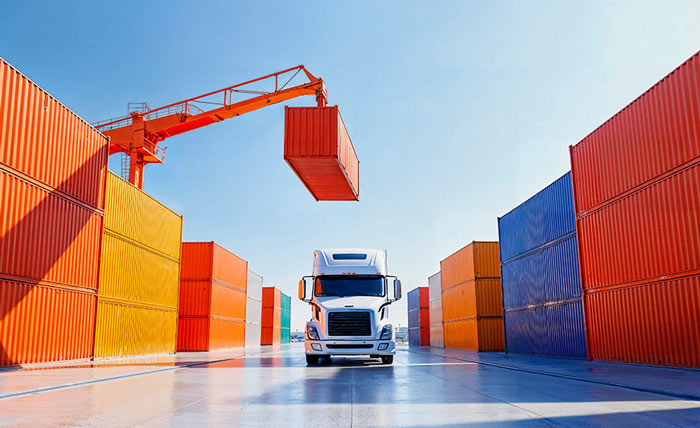
How Modern Logistics Improves Efficiency Logistics used to mean moving things from Point A to Point B. Today, it means orchestrating a complex, interconnected system — and the businesses that do it well are winning on speed, cost, and customer experience simultaneously. The past decade has brought a wave of technology, data, and operational thinking that has fundamentally changed what’s possible in supply chain management. From AI-powered forecasting to real-time tracking and automated warehouses, modern logistics isn’t just faster — it’s smarter. And that intelligence translates directly into efficiency gains that compound across every part of the business. Here’s how it works. 1. Real-Time Visibility Eliminates the Guesswork Traditional logistics operated largely on estimates and assumptions. A shipment left the dock, and the next reliable update came when it arrived — or didn’t. That information gap forced businesses to build in buffers: extra inventory, longer lead times, and costly contingency plans. Modern logistics platforms close that gap completely. GPS tracking, IoT sensors, and connected carrier networks give businesses live visibility into exactly where every shipment is, what condition it’s in, and when it will arrive. Exceptions — delays, temperature excursions, route deviations — are flagged automatically, often before they become problems. The efficiency gain isn’t just operational. It’s organizational. When procurement, warehouse, and customer service teams all work from the same real-time data, they stop wasting time chasing updates and start making better decisions faster. 2. Automation Is Transforming the Warehouse The modern warehouse looks nothing like it did 15 years ago. Automated conveyor systems, goods-to-person robotics, pick-to-light technology, and AI-driven warehouse management systems (WMS) have replaced many of the manual, error-prone processes that made fulfillment slow and expensive. The results are measurable. Automated warehouses typically achieve pick accuracy rates above 99.9%, compared to 98–99% for manual operations — a difference that sounds small but represents thousands of mispicks avoided per month in high-volume facilities. Throughput speeds up dramatically. Labor costs per unit fall. Critically, automation also improves scalability. A manual warehouse struggles to handle a 3x volume spike during peak season without a proportional surge in headcount. An automated facility can absorb that demand far more gracefully — which means businesses can grow without their logistics costs growing at the same rate. 3. Route Optimization Cuts Time and Cost on the Road Getting goods to the right place is only part of the challenge. Getting them there efficiently — across hundreds or thousands of daily deliveries — requires computational power that no human dispatcher can match. Modern route optimization software analyzes thousands of variables simultaneously: traffic patterns, delivery time windows, vehicle capacity, driver hours, fuel costs, and customer priorities. It produces routes that are tighter, faster, and cheaper than anything planned manually — and it adjusts dynamically when conditions change. For last-mile delivery, where costs are highest and customer expectations are most demanding, this matters enormously. A 10–15% reduction in route distance translates directly into fuel savings, lower vehicle wear, fewer driver hours, and more deliveries per shift. Multiply that across a fleet of any meaningful size and the numbers become significant quickly. 4. Predictive Analytics Reduces Costly Surprises One of the most expensive things in logistics is being caught off guard. An unexpected demand spike, a supplier disruption, or a capacity crunch can trigger a cascade of emergency decisions — expedited freight, last-minute sourcing, overtime labor — each of which carries a heavy premium. Modern logistics uses predictive analytics to shrink the window of the unexpected. Machine learning models analyze historical patterns, external signals (weather, economic indicators, market trends), and real-time data to forecast demand, flag potential disruptions, and recommend proactive responses before problems materialize. The efficiency improvement here is asymmetric. Preventing a single supply disruption or avoiding one wave of emergency freight often delivers more value than dozens of incremental optimizations. Predictive capability is one of the highest-ROI investments a logistics operation can make. 5. Integrated Technology Platforms Replace Fragmented Systems One of the most overlooked sources of logistics inefficiency is fragmentation. When the TMS doesn’t talk to the WMS, the WMS doesn’t connect to the ERP, and the ERP can’t surface data to customer service, information moves slowly — or not at all. Decisions get made on stale data. Errors multiply at every handoff. Modern logistics technology platforms are built for integration. APIs, cloud infrastructure, and standardized data formats mean that systems across the supply chain — carriers, warehouses, customs brokers, suppliers, and customers — can exchange information in real time with minimal friction. The efficiency gains from integration are often hidden but substantial. Fewer manual data entries. Fewer errors at handoffs. Faster exception resolution. Less time spent reconciling conflicting information from different systems. When data flows seamlessly, people can focus on decisions rather than data wrangling. 6. Sustainability and Efficiency Are Converging For years, sustainability and efficiency were seen as competing priorities — doing the right thing environmentally meant accepting higher costs or slower operations. That trade-off is increasingly obsolete. Modern logistics tools — optimized routing, load consolidation, modal shift analysis, and network design software — often deliver both simultaneously. Fewer trucks on the road means lower emissions and lower fuel costs. Better-utilized warehouse space means less energy per unit stored. Reduced packaging materials cut both waste and cost. This convergence matters strategically. As regulatory pressure, customer expectations, and investor scrutiny around environmental performance all increase, logistics operations that have already optimized for efficiency are better positioned to meet sustainability targets without starting from scratch. 7. Better Data Makes Supplier and Carrier Relationships Stronger Efficiency doesn’t stop at your own four walls. The performance of your suppliers and carriers directly affects your logistics costs — and modern logistics technology gives you the data to manage those relationships more effectively. Scorecards, on-time delivery metrics, lead time variance analysis, and cost benchmarking are no longer difficult to produce. When you can show a carrier precisely where their performance falls short — or demonstrate to a supplier how their late deliveries ripple through your fulfillment costs —